 Catalina Island Snorkeling
What to Bring to Catalina Island: The Full Packing List
Last reviewed September 2026
What to bring to Catalina Island turns out to be a short list, because the boats hand over more than most excursions do: mask, snorkel, a life jacket, lunch, an open bar and the protected-area admission arrive with the fare on all five listings compared here. What is left to pack is the small stuff the boat cannot supply for hygiene or fit reasons: sunscreen, a change of clothes, cash, and a few items that matter more here than on an ordinary beach day because the snorkelling happens over living coral in a protected area. This page works through the trips and what each one supplies before laying out the rest.
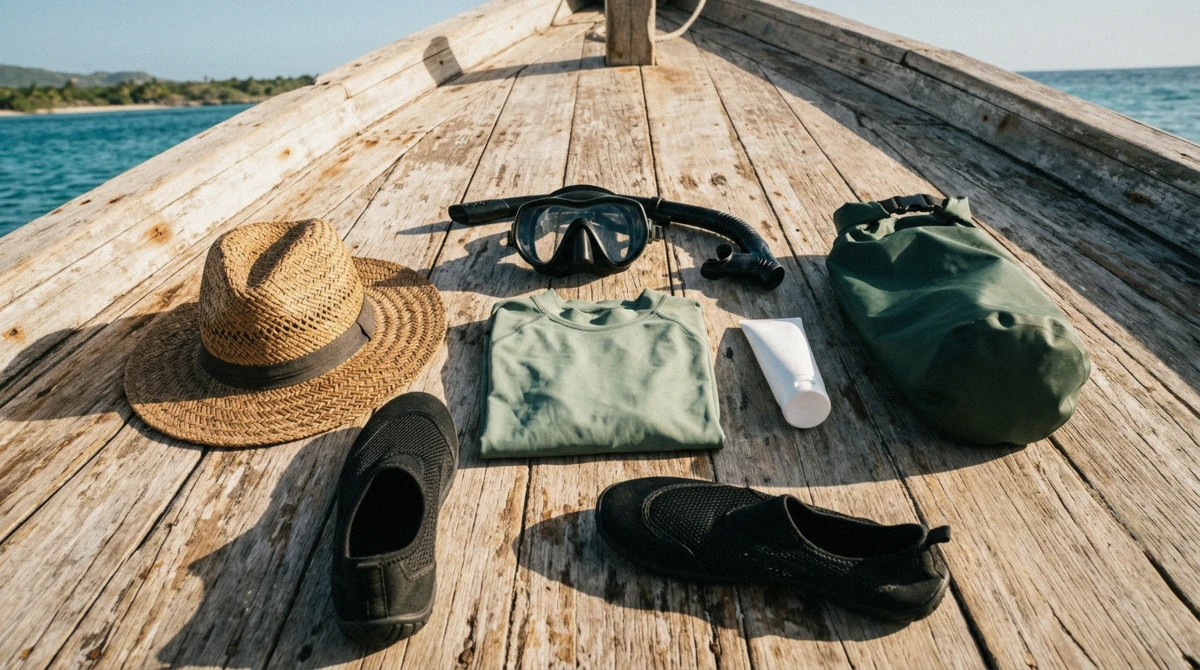
Quick answer The boats supply the gear; sunscreen, shoes and cash are on you
None of the five listed trips supply reef-safe sunscreen, water shoes or a dry bag. Everything else that touches the water, from the mask and snorkel to the life jacket, is handed over at the boat. Pack sunscreen that is safe for the reef, since the shallow snorkel site sits at only about 13 ft over living coral, a change of dry clothes, a hat with a strap, and small cash for tips and beach vendors. One listing also hands out beach towels; the rest do not, so bring your own unless that specific trip is the one you booked.
Key takeaways
- Mask, snorkel and life jacket are provided on every listed trip; pack your own only if you prefer the fit
- Reef-safe sunscreen is on you; no listing supplies any sunscreen at all
- Only the small-group tour hands out beach towels
- Several boats are boarded barefoot from the beach, and the Quetzal catamaran boards by taxi boat
- Cash matters more than usual: beach vendors and tips take no card
- A motion-sickness tablet earns its place on the longer crossings; see how the crossing times compare
What the Boats Hand You, and What You Bring
Reading the five listings side by side
The table below is built from the actual inclusions on each operator's listing, read in September 2026, not from a generic packing-blog assumption of what a snorkel trip usually includes.
| Item | Usually provided | Bring your own | Notes |
|---|---|---|---|
| Snorkel mask and snorkel | Yes, all five listings | Not needed | Fitted at the boat; a spare strap helps if you wear glasses |
| A life jacket | Yes, all five listings | Not needed | Worn during the snorkelling stops on every trip |
| Beach towels | Only on the small-group tour | Yes, on the other four | The one listing here that mentions towels at all |
| Sunbeds and bathrooms on the beach | Only on the comfort catamaran | Not needed | Part of its 2.5 hours of beach time; sunbeds are set up on the sand for the whole stop |
| Lunch | Yes, all five, buffet or plated | Not needed | A full Dominican meal, not a packed snack |
| Open bar (soft drinks, beer, rum) | Yes, all five | Not needed | Runs on board and again on the beach on most trips |
| Protected-area admission | Yes, all five | Not needed | Included in the fare, not paid again on the island |
| Photography service | Only on the small-group tour | A waterproof phone case elsewhere | An add-on service, not a free extra |
| Reef-safe sunscreen | No listing | Yes | Nothing here supplies sunscreen of any kind |
| Water shoes | No listing | Optional | Several boats board barefoot from the beach |
| Cash for tips and vendors | No listing | Yes, small bills | Beach sellers and tips are cash only |
| A dry bag or waterproof phone case | No listing | Yes | Nothing here mentions one being supplied |
The Packing List
Eleven things worth having in the bag
Everything below is something at least one of the five listings expects you to bring yourself, drawn from the operators' own what-to-bring notes, which name swimwear, a towel, sunscreen, sunglasses, a hat, beachwear, dry clothes, a charged phone and cash.
- Reef-safe sunscreen: apply it before boarding, not on the beach
- A change of dry clothes: the ride back is long if you stay wet the whole way
- A hat with a chin strap: it will not survive the crossing without one
- Sunglasses with a strap: deck spray takes them off your face fast
- Cash in small bills: beach vendors and tips take no card
- A charged phone in a dry bag or waterproof case: for the reef the trip is sold on
- A motion-sickness tablet, taken about an hour before departure: some crossings run under way for two hours or more
- A light rash guard or cover-up: hours on open water burn skin that sunscreen alone will not stop
- Water shoes, if you own a pair: several boats board barefoot from the beach or over uneven ground
- A spare mask strap or clip, if you wear glasses: no listing rents one
- A refillable water bottle: the open bar pours soft drinks and rum before it pours plain water
Reef-Safe Sunscreen, and Why It Matters Here
Shallow water, living coral
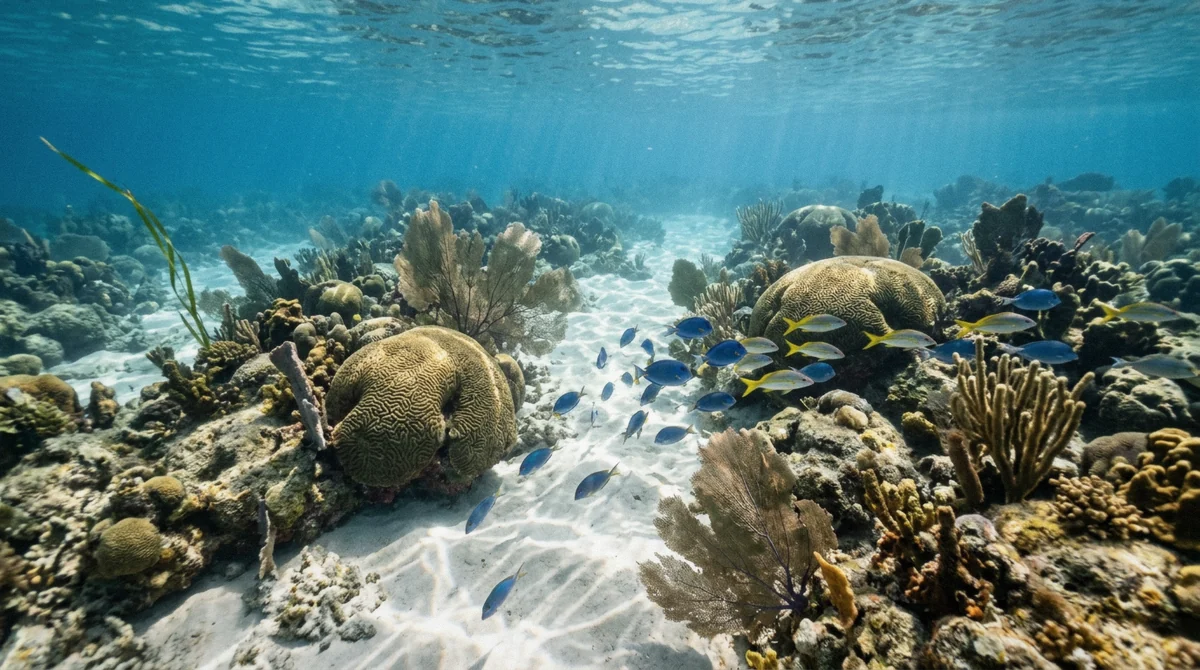
The snorkelling on every listed trip happens inside a protected natural monument, over living coral, and the shallower of the two named sites sits at only about 13 ft, shallow enough that anything washed off a swimmer's skin settles on the reef beneath them rather than dispersing into open ocean. That combination of depth and protected status is the practical reason to pack mineral, reef-safe sunscreen rather than whatever is already in a hotel bathroom, and to put it on well before boarding so it has time to set instead of rinsing straight off in the first few minutes in the water.
None of the five listings supplies sunscreen of any kind, reef-safe or otherwise, so this is squarely on the traveller. A tube bought at a Bayahibe pharmacy or a Punta Cana resort shop the night before solves it; remembering it after the boat has left does not.
A long-sleeve rash guard does the same job without relying on reapplication at all, which matters on a day that runs seven to eleven hours door to door with limited shade once you are on the sand. Between the two, covering the shoulders and back with fabric for the middle of the day and reserving sunscreen for hands, feet and face is the combination that holds up best across a full day on the water.
Footwear, Because Several Boats Are Boarded Barefoot
What actually happens at boarding
Boarding varies more than most packing lists admit. The all-inclusive trip from Punta Cana boards barefoot straight off the beach, and the Quetzal catamaran boards by taxi boat rather than a fixed dock, which means a short transfer over open water in whatever you are wearing on your feet before you even reach the main vessel. Neither situation calls for hard-soled shoes, and both make a strapped water shoe more useful than a flip-flop that can float off in the transfer.
Water shoes are not supplied on any listing, so it is a bring-your-own decision rather than an assumption about what is waiting on board. Anyone comfortable going barefoot on sand and a boat deck can skip them; anyone snorkelling near rock or the natural pool on the small-group tour will be glad of the grip.
The small-group tour and the comfort catamaran both board from a marina rather than open sand, which is a smoother walk to the boat than the beach-boarding listings, but neither replaces the case for a strapped shoe once you are in the water near coral rather than swimming in open sand between the two named sites.
Seasickness, and When to Take the Tablet
The crossing decides it, not the snorkelling
Motion sickness is settled on the crossing, not in the water. On the comfort catamaran, four of the trip's seven and a half hours are spent under way rather than at anchor or ashore, which is a lot of open-water time for anyone who feels queasy on a boat. The general rule that applies across every listing here is the same one doctors give for any crossing: take a motion-sickness tablet about an hour before departure, not once the swell has already started, since none of it works retroactively.
Sitting toward the centre of the boat and keeping eyes on the horizon rather than a phone screen helps on the longer catamaran routes. Nobody selling these trips mentions seasickness in their marketing copy, which is exactly why it belongs on a packing list instead.
What Not to Bring
Rules that come straight from the operators
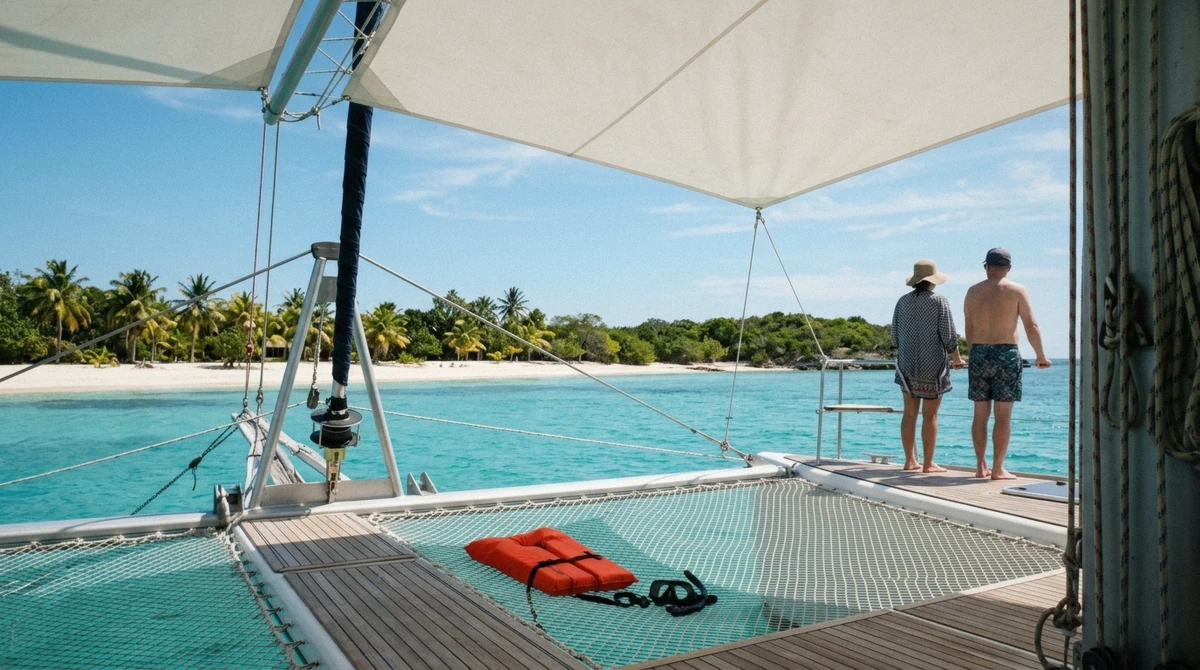
A few restrictions are worth knowing before you pack rather than at check-in, and they differ by listing rather than applying uniformly across all five. The table below reads each restriction off the operator's own listing rather than a generic rule, since assuming one trip's exclusions apply to another is exactly the kind of mistake a packing list should prevent.
| Restriction | Applies to | Detail |
|---|---|---|
| Alcohol in the pickup vehicle | Full-day trip from Punta Cana | Drinks are unrestricted once you are on the boat or the beach |
| Strollers and baby carriages | All-inclusive day from Punta Cana | Babies under 1 are not accepted on the same listing |
| Pregnant women | Comfort catamaran | Stated directly among the listing's exclusions |
| Mobility impairments | Quetzal catamaran | Boarding is by taxi boat, which the listing flags as unsuitable |
| Wheelchair users, back problems, travellers over 70 | Full-day trip from Punta Cana | The longest and most physically demanding of the five days |
The practical case against packing heavy
Beyond the operators' own restrictions, there is a simple argument against bringing more than the checklist above: glass containers have no real use on a beach day and are the kind of thing a boat crew will ask you to leave behind anyway, and jewellery risks a genuine loss in open water that no operator will replace. None of the five listings promises lost-property recovery, and a boat deck, a beach and open water are three different places an earring or a watch can end up.
- Alcohol inside the pickup vehicle, on the listing that states the rule
- Strollers and baby carriages, on the listing that excludes them
- Pets, on every listing that states a conduct policy
- Glass containers or anything genuinely breakable
- Valuable jewellery you would mind losing in open water
Packing for Catalina Island: Common Questions
What should you take on a Catalina Island trip?
Reef-safe sunscreen, a change of dry clothes, a hat and sunglasses with straps, cash for tips and beach vendors, a charged phone in a dry bag, and a motion-sickness tablet if the crossing is a concern. Everything that goes in the water (mask, snorkel and life jacket) is handed to you at the boat.
Do you need to bring your own snorkel gear?
No. All five listings supply a mask, snorkel and life jacket as part of the fare. Bring your own only if you prefer a mask that fits a specific face shape or wear a prescription snorkel mask, since none of the operators mention that option.
What sunscreen is safe for the reef?
A mineral, reef-safe formula, applied before boarding rather than on the beach. The shallow snorkel stop sits at only about 13 ft over living coral inside a protected natural monument, so whatever washes off a swimmer settles on the reef rather than dispersing, which is the reason to pack it rather than rely on whatever is already in a hotel room.
Do you need water shoes on Catalina Island?
Not strictly, but they help. Several boats are boarded barefoot from the beach, and the Quetzal catamaran boards by taxi boat over open water, so a strapped water shoe is more useful than sandals that can come off in the transfer. None of the listings supplies them.
What is not allowed on the excursion?
It varies by listing: one bars alcohol inside the pickup vehicle, another excludes strollers and baby carriages, and conduct rules on several bar pets, intoxication and nudity. Check the specific listing's rules before you book if any of these apply to your group.
How early should you take a motion-sickness tablet?
About an hour before departure. On the comfort catamaran, four of the seven and a half hours are spent under way, which is enough open-water time that waiting until the swell starts is already too late for most tablets to help.
What should you leave at the hotel?
Valuable jewellery, glass containers, and anything you would be upset to lose in open water or sand. None of it earns its place on a boat day, and losing it is a real possibility, not a theoretical one, on a trip that includes swimming, a beach stop and a taxi-boat transfer on at least one listing.
The short version: the boats do the heavy lifting on gear, and what is left to pack fits in a small bag. Reef-safe sunscreen, dry clothes, a hat and sunglasses that will not blow off, cash for the beach vendors, and a motion-sickness tablet if the crossing worries you. Water shoes are optional rather than required, and the one thing worth checking before comparing what each Catalina Island snorkeling listing packs into its fare is which specific listing hands out towels, since only one of the five does.
What each trip charges separately, beyond what is packed here, is covered in full on the cost breakdown for the five listings.